Contact : 99 40 38 2149
Builtup area :933 sft
UDS : 620sft
Bedrooms : 2 Nos
Bathrooms : 2 Nos
No. of floors : G+3
Price : 85 Lakhs
Open car parking
Showing posts with label Sale. Show all posts
Showing posts with label Sale. Show all posts
Oct 17, 2020
Factors affecting sale price of properties
Following factors influence the sale price of Apartments , this has a bearing on land price ultimately .
1. Nearby micro market study2. Proximity from the main road
3. Retail Market
4. Neighbourhood
5. School /Malls
6. Travel Network
7. Demand Drivers
8. Water Facility
9. Daily Needs (Market)
10. Future Development
11. Government Facility
12. Kind of Structure (S+5, MSB)
13. Road Width
14. Hazard Zone
15. Size of the road
16. Future Road widening (Proposed)
17. FSI
18. Population (Clarity of the Location)
19. Soil
20. Flooding
21. Bank Funding for units
22. Pollution
23. HT Line
24. Vaastu
25. Size of the Unit
26. Government Subsidy
27. Supply
28. Competition Pricing
29. Competition Pricing of Micro Market
30. Land Availability
31. Intrinsic Value of the property
32. Future Project
33. Velocity
34. Demand
35. Government Stability


Jun 5, 2020
Adyar Padmanabha Nagar New 2 BHK Flat Sale
| Property Type | Flat |
| Sale Amount |  1,86,00,000 1,86,00,000 |
| Land Area | 640 Square Feet UDS |
| Built up area | 1185 Square Feet |
| Age of the Building | Brand New |
| No. of Floors | Stilt+2 |
| Bedrooms | 2 |
| Bathrooms | 2 |
| Car Park | 1 Covered |
| Furnished | Semi furnished |
| Power Supply | 3 Phase |
| Lift | Yes |
| Water Facility | Metro Borewell Other |
| Amenities | Close to all amenities |
| Generator | Yes |
Additional Information:
| |
Jun 8, 2016
Mahalingapuram 2 BHK flat for sale
Mahalingapuram
Near Loyola College, Nungambakkam
Posh 2 BHK flat for sale
Spacious 1380 sqft built up area
3rd floor
South facing
Lift available
Open car parking available
Contact for price and site visit.

Oct 13, 2014
T. Nagar near Bus Stand 2 BHK Flat for Sale
Location
|
T.Nagar, Madley Road 1st Street, Near Shasun Jain College for Women
|
Property Type
|
2 BHK Flat
|
Built-up Area(SqFt)
|
620
|
Land Area(SqFt)
|
325
|
Age of Building(Years)
|
20
|
No. of Floors
|
G+2; Flat on 1st Floor
|
No. of Bedrooms/Bathrooms
|
2/1
|
Flooring
|
Mosaic
|
Furnished
|
Semi-Furnished, Built-in Wardrobes,
|
Car Parking
|
Open Not Allotted
|
Lift
|
No
|
Power Back-up
|
No
|
Builder
|
Sakthi Constructions
|
Investment(PSF)
|
9,000/-
|


Jun 5, 2014
Check Points before selling property
| Points to consider before selling property | ||
| ||
| ||
| ||
| ||
|
Feb 16, 2014
5 Benefits of Exclusive Listing
Exclusive Listing also called as
Exclusive Mandate
Exclusive Authorisation to Sell
Exclusive Agency
Exclusive Rights to Market/Sell
Exclusive Mandate
Exclusive Authorisation to Sell
Exclusive Agency
Exclusive Rights to Market/Sell
This is a time-bound performance based employment contract issued by the Seller to an Agent to represent him in a Sale transaction. Usually this is irrevocable.
The contract clearly specifies Seller Role and Responsibilities/Duties of the assigned Agent.
Like any other time bound contract it has beginning date and ending date and the Name and Address of Seller.
The Sale price is mentioned by the Seller which is usually negotiable.
The Sale price is mentioned by the Seller which is usually negotiable.
After going through the contract Seller signs on all pages accepting the terms mentioned therein.
Typical duration for this contract is for 3 months going upto one year.
At the end of the contract period in case sale does not materialise, both the Seller and Agent mutually can decide on an extension of the contract based on Seller's experience with Agent.
At the end of the contract period in case sale does not materialise, both the Seller and Agent mutually can decide on an extension of the contract based on Seller's experience with Agent.
Our experience with Exclusive Listing is that it ensures win-win situation for both the Seller and the Agent.
Benefits to Seller-
1. He is relieved of the pressure as the responsibility of Sale shifts to the Agent.
2. Seller has one point of contact with Listing Agent and communication becomes easy.
3. Seller can avoid confusion in the market as there is only one Agent working on the property at any given time.
4. No dissonance in the market about property price which is typical when several agents market the property.
5. Seller can get the best price in the market.
Benefits to Seller-
1. He is relieved of the pressure as the responsibility of Sale shifts to the Agent.
2. Seller has one point of contact with Listing Agent and communication becomes easy.
3. Seller can avoid confusion in the market as there is only one Agent working on the property at any given time.
4. No dissonance in the market about property price which is typical when several agents market the property.
5. Seller can get the best price in the market.
Benefits to Agent-
1. Assured employment and work during the contract period.
2. Helps to focus all his time, energy and efforts in the property as it ensures income when sale materialises.
3. Helps in creating effective marketing strategy to complete sale within contract period.
4. Job satisfaction on completion of sale as the % of closure dramatically improves with listed property.
5. Will be the public face for the property during the contract period.
1. Assured employment and work during the contract period.
2. Helps to focus all his time, energy and efforts in the property as it ensures income when sale materialises.
3. Helps in creating effective marketing strategy to complete sale within contract period.
4. Job satisfaction on completion of sale as the % of closure dramatically improves with listed property.
5. Will be the public face for the property during the contract period.
Typically Seller may leave the keys of the vacant property with the Agency during the contract period.
Also available similar contract for Buyers called "Exclusive Authorisation to Buy" which is beneficial for buyers to work with focused Agent.
+OMR Rgschennai +HanuReddyRealty West Chennai +Hanu Reddy Chennai +HANUREDDY REALTY INDIA PVT LTD
+OMR Rgschennai +HanuReddyRealty West Chennai +Hanu Reddy Chennai +HANUREDDY REALTY INDIA PVT LTD

Sep 4, 2012
Sold! Flat at Halls Road, Egmore

Testimonial from the Buyer Mr Rinaldo
TESTIMONIAL FOR MR. BHAVA
I write
this testimonial to Mr Bhava on completion of our purchase of Flat in
Egmore at the address Flat 10A, 33 Halls Road, Chennai 600008. I
always had a thinking that the real estate agencies are not safer on
many of my perspectives to go for a sale or purchase. But Mr Bhava at
Hanu Reddy Reality has really proved me wrong. His patience in
dealing the customers, his pleasant approach and understanding of
customers concern has really been a great quality which I observed in
this whole deal. He was really genuine in completing the deal when we
fixed the price to buy the property. He made every process, meetings
and communication very much smoother between the seller and us. The
service rendered by him was truly excellent and above expectations.
I am
really grateful for the work he has done and I would like to come to
Hanu Reddy for my future purchases or sales too..!! I wish him all
the best for his continuous excellence in Hanu Reddy Reality.
Kind
Regards
Rinaldo J
A
Door 33,
Flat 10A, Halls Road,
Egmore,
Chennai 600008
Chennai 600008
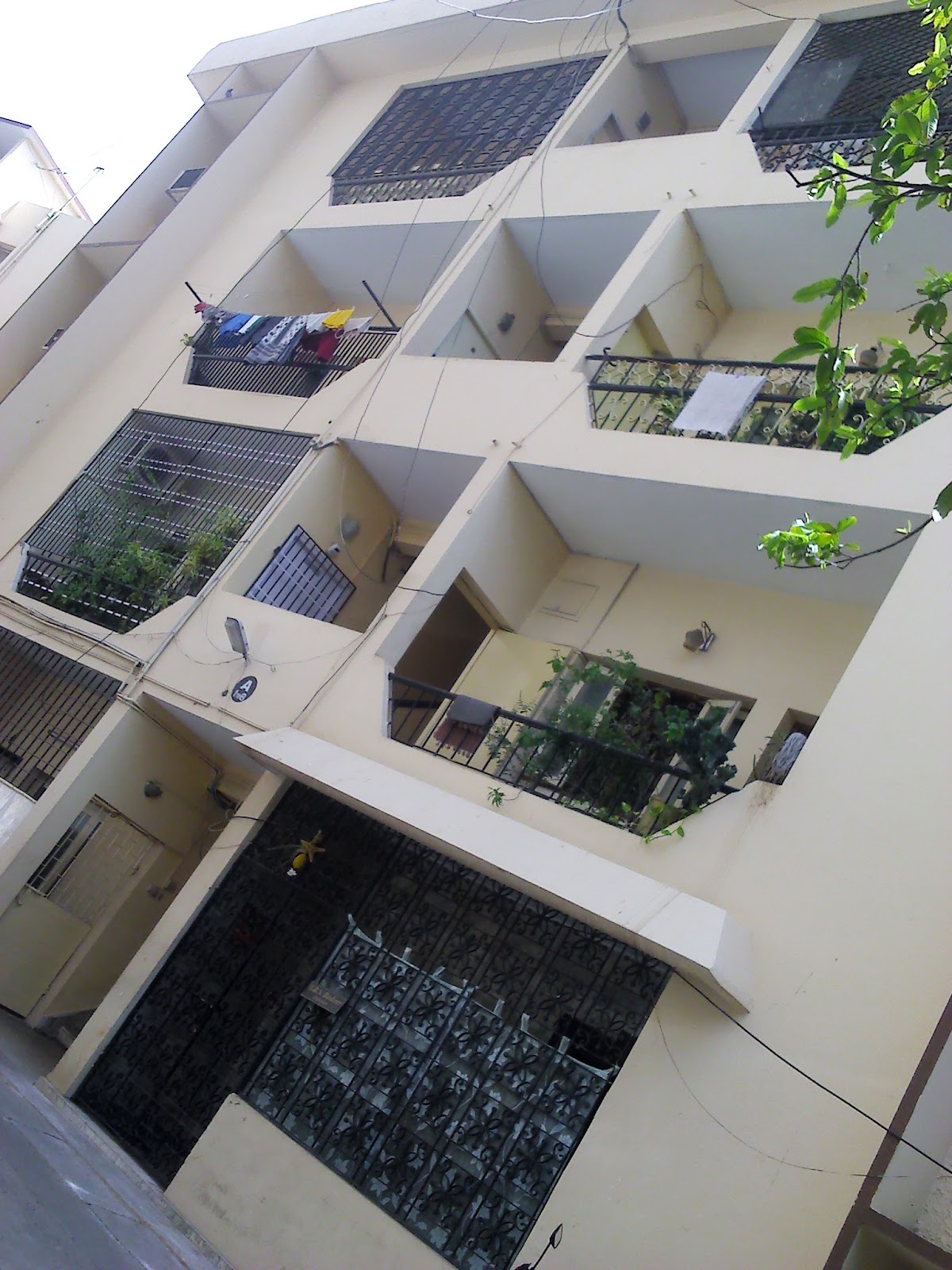
Property Type : Flat
Builtup
Area : 1000 Sft
Land Area : 306 Sft.(UDS)
Age of
Building : 30 Years
No. of
Floors : G+3
Builder : P A Builders
Flooring : Mosaic
Furnished : Semi-Furnished
Available : Ground Floor
Bedrooms : 2
/ 2 Baths
Car
Park : Open - 1
Additional Details : Central location, Gated Community. Suits Commercial also. 2 Entrances available. Well maintained.


Jul 13, 2012
Sold! Posh 2 BHK Flat at Virugambakkam
Testimonial from Seller of the YS Enclave Flat.

To
All Hanu Reddy Team
I wish to thank the Hanu Reddy team for their whole hearted cooperation in
connection with the selling of the flat at Y.S Enclave in Chennai I owned .
My hearty thanks & congratulations for Mr Bhava Swaroop for his tremendous efforts in locating a suitable buyer and excellent cooperation in making the deal successful and Win Win feeling for both buyer and seller.I wish him all success in his future endeavor exhibiting
My great appreciation for Mr Vijay who had coordinated further activities after
I wish him all success in his
career by his very good mannerism and best efficiency.
Regards
N.Jayasankar
Flat 303,Hamilton Bliss,Green Glen layout
Bellandur,Bangakore -560103
A Block, YS Enclave, Arcot Road, Virugambakkam(Adj.Avichi School)
Property
Type : Flat
Builtup
Area : 1173
Sft.
Land Area : 350 Sft.(UDS)
Age of
Building : 3 Years
No. of
Floors : S+11
Builder : Appaswamy Builders
Flooring : Vitrified Tiles
Furnished : Semi-Furnished PVC Wardrobes & Modular Kitchen.
Available : 1 Floor
Bedrooms : 2
/ 2 Baths
Car
Park : Open - 1
Additional Details : Gated Community with all amenities like Club
House, Gym, Swimming Pool, Play Area, Library, Intercom etc.,
Photos : Click for Photo Album
Jun 10, 2012
Have full knowledge of the market conditions before disposing of the house
Of course, it is not easy to sell a house where one has lived for decades. If that is
so, why do people sell their houses?
After all, isn't a house meant for one's permanent living? In the good old days of
the joint-family system, the ancestral house always came to one's rescue in
giving shelter - and shelter was all that people mainly wanted. The position has
changed substantially with the younger generations branching out.
Samir Jasuja of PropEquity says that there are several issues that force people to
sell their homes. The issues involved may include: Inadequacy of space in the
present house. Increase in cost of the plot, securing a handsome price in case of
sale of the old house, which may be invested in another property at a less costly
and less congested locality. In this situation , while a portion of the sale proceeds
could be reinvested in another property, the balance could be saved for
exigencies. Another reason that drives people to sell is when developers tie up
with them to build multistorey apartments on their plots and giving them
possession of one floor over and above the sale amount they receive when they
dispose of their old house.
How can you sell your house faster and at a reasonable price? Sanjay Khanna,
the director of Kailash Nath Projects Pvt Ltd says that one must have full
knowledge of the market conditions, deals going on in the area, price at which
recent deals were struck, and of course acquaintance of a reliable real estate
agent in the locality. Knowledge of regulations governing sale-related matters
applicable to the house in question, stamp duty and registration charges, tax
implications, etc, is also a must.
Remember, if your house is a little old, it may need some repair or renovation,
which may be carried out before you talk to property consultants of your
intention to sell it. Essentially, the repair should include the bathroom, the
closets and the kitchen.
A touch-up of painted and varnished surfaces would add to a well-cared for look
and aesthetic value. All these tend to fetch a decent sum for your house.
Some people are averse to the idea of a middleman in the sale of one's house
but this may not always be to their advantage. Paying brokerage or commission
alone should not deter you from approaching a reliable agent.
An agent, with years of experience, would be in a better position to execute a
clean deal, as otherwise you will have to haggle with many prospective buyers,
some of whom may not be genuine.
Narender Gambhir, who deals with tax and housing matters, says that the sale
procedures of a house are many and vary from deal to deal. Some important
legal and taxation issues are documents to be executed and exchanged,
absolving the seller from future tax payments, capital gains-related investments
and deposits, accounting of full value received, payment of stamp duty and
registration charges as per current laws, etc.
Similarly, if the deal is with a builder for raising apartments, the agreement
involves cost of your site, total cost of the project, the number of apartments
you will be given, the cash you will get, etc. All these need critical study and
drafting so that you receive a satisfactory deal and the wording of the agreement
protects your interests.
Sanjay Khanna says: "When I meet somebody who is planning to sell his house, I
always discourage him. I tell him that if he sells the property, he will have a lot
of issues to settle. Hence, it is better to unlock the property. It would serve his
cause better in every possible manner."
Realty experts say that sellers should keep in mind that when they dispose of
their property and buy another one, they have to pay a broker's commission
twice, for both transactions. The commission you pay varies between 1-2 % of
the cost of the property. Then there's a 6% stamp duty for every property
transaction, so, when you sell the buyer pays stamp duty, but when you buy you
pay the entire stamp duty. By the time you wrap up the deal, you could have lost
as much as 10% of your gains. And, in case you want to buy another property
with the proceeds of the sale you could end up losing as much as 20% of the
value as transaction costs in the entire process.
Apart from this financial setback, there's the passing but very real emotional loss
that comes with selling a house that's been home for decades.
Narender Gambhir says that any gain arising from the sale of a house is taxable
under the provision of Income Tax Act, 1961. However, the act provides
exemption in certain circumstances. Here is how one can compute capital gains
and other aspects involved during taxation on the sale of a house.
When a house is being sold, the first step is to determine whether it falls under
the category of long-term capital asset (LTCA) or short-term capital asset (STCA).
If the house is held for up to three years from the date of acquisition, it is
classified as STCA and, accordingly, any gain arising from it is termed as short-
term capital gain (STCG). On the other hand, if the period exceeds three years,
the house is termed as LTCA and any gain arising from it is termed longterm
capital gain (LTCG).
In case the house is a STCA, cost of acquisition and improvement of the asset
along with expenses incurred at the time of its sale are deducted from the sale
consideration received to arrive at STCG. But in case the house is a LTCA, the act
provides relief to cover for the inflation by permitting the enhancement of the
actual cost and (or) cost of improvement with reference to cost inflation index
notified by the central government.
In case the gain arising on sale of house is in the nature of LTCG, one can save
tax by making investments subject to fulfilling the specified conditions as
contained in the respective sections of the Income Tax Act, 1961.
LTCG arising on transfer of a residential house property is exempt if the same is
reinvested in a new residential house under Section 54 of the act.
The gain arising on transfer of any LTCA is exempt if the sale proceeds are
invested in the notified bonds within a period of six months from the date of
transfer. However, there is a cap of Rs 50 lakh per fiscal year for making
investment in such bonds under Section 54EC.
Source:Economic Times
Jan 23, 2012
///Sold///T.Nagar, Habibullah Road Flat
T.Nagar, Habibullah Road Flat


- Opposite Kannada Sangha School
- 3 Bedroom Flat
- 1200 SqFt Built-up Area
- Reputed Builder
- Lift & Covered Car Parking
- Good Woodwork
- Close to PSBB and Vidyodaya Schools
- Modular Kitchen


Subscribe to:
Posts (Atom)